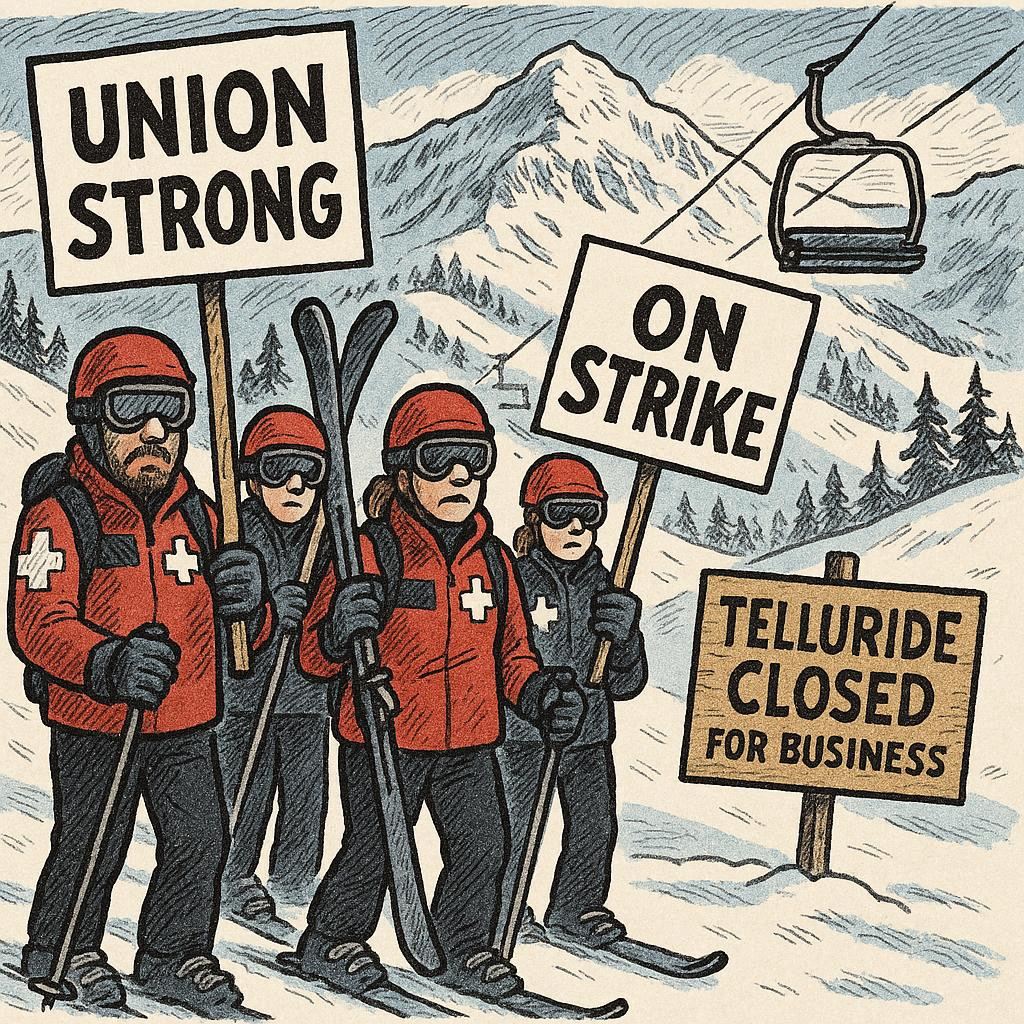
TELLURIDE, Colo. — One of North America’s most iconic ski resorts has come to a standstill due to a labor dispute that’s now entered its second week, leaving slopes empty and holiday plans up in the air.
Telluride Ski Resort has been closed since Saturday, December 27, 2025, after the Telluride Professional Ski Patrol Association (TPSPA) voted overwhelmingly to strike following months of contract negotiations that failed to produce an agreement on wages and working conditions.
Why the Strike Happened
Patrollers and resort management had been in talks since August, attempting to negotiate a new contract to replace the one that expired in late summer. Talks accelerated in December as the busy holiday season approached.
At the center of the dispute is pay:
The union is seeking a significant wage increase — roughly a $7.78 per hour bump for a median wage of about $35.09 per hour, with a range of $26 to $53 an hour depending on experience.
The resort’s offer proposed a more modest increase, bringing starting wages to roughly $30 per hour with incremental raises for advanced and veteran patrollers.
Patrollers argue that Telluride’s high cost of living — including steep housing costs — combined with decades of compressed wages has made it difficult to retain experienced staff. Some long-time patrollers say training and avalanche control work make their role critical to mountain safety, and that compensation should reflect that reality.
Resort Closure and Community Impact
The resort confirmed that it closed in response to the strike decision, stating it would remain closed until a safe reopening plan could be developed. Snowmaking operations continue, but lifts remain idle and lift-side terrain is unavailable to guests.
The timing couldn’t be worse: Telluride would normally be bustling with skiers and snowboarders over the last week of December and into January. Instead, lodging occupancy in Telluride and Mountain Village is down significantly from last year’s numbers, and many vacationers have altered or cancelled their plans.
Support From Nearby Resorts
In a show of industry solidarity, Monarch Mountain — another Colorado ski area — is offering free lift tickets through January 8 to both Telluride employees and affected guests. Eligible guests include Telluride passholders and those with proof of ticket purchases during the closure period.
This kind of cooperative offer highlights how closely ski communities can work together in tough times, even as negotiations remain at an impasse.
What the Patrollers Are Saying
Patrollers have emphasized that this strike isn’t just about money — it’s about safety, retention, and career viability. Union leaders point to the difficulty of recruiting and keeping experienced patrollers when wages don’t align with the cost of living and the unique risks of big-mountain terrain.
One union vice-president noted that many patrollers currently make wages that leave them just scraping by in one of Colorado’s most expensive communities, forcing many to take second jobs just to make ends meet.
No Clear End in Sight
As of now, there is no confirmed date for when the strike will end or when Telluride Ski Resort might reopen. Resort officials and union representatives have not reached a new offer, and negotiations appear stalled. Both sides face pressure:
The resort confronts economic losses from empty slopes and reduced tourism.
Patrollers argue that without a livable wage structure, they will continue to lose experienced staff and compromise mountain safety.
How This Affects Riders
For anyone planning a trip to Telluride this season:
Lift operations and ski terrain remain closed until further notice.
Refunds and credits are being offered to passholders and ticket holders affected by the closure.
Nearby resorts like Monarch Mountain may offer alternatives or special deals for displaced riders.
Snowboarding at Telluride — one of the sport’s most legendary big-mountain destinations — has never faced quite this socio-economic challenge before. As the strike continues, riders and locals alike are watching closely, hoping for a resolution that supports both safety and community sustainability.